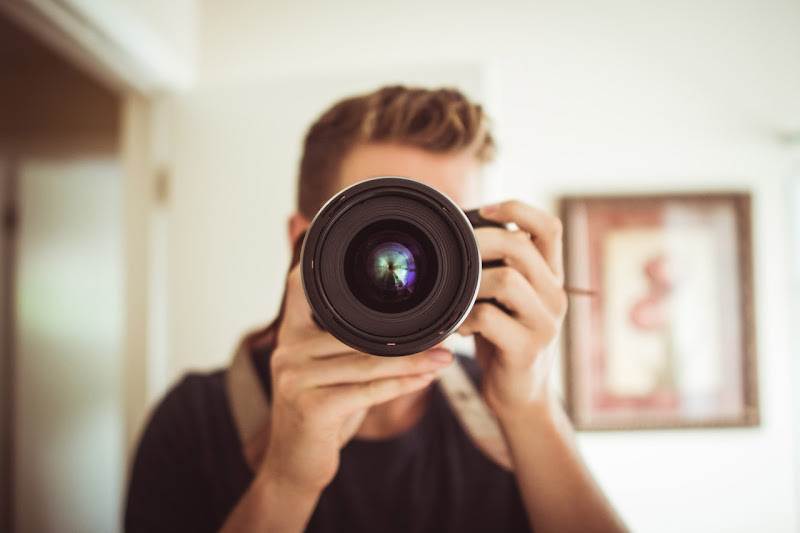
We now have more access to cameras than ever before, and the majority of us always have one with us on our mobile devices. This implies that practically everyone has taken up photography, exchanging images with friends and family via email and text messages or publishing them on social media.
But not everybody is a photographer by trade. We contacted some of our incredible professional photographers at Photogenic, Inc. and Cherry Hill Programs to provide their advice because of this. We're confident that following their recommendations will enable you to take the greatest pictures and preserve special moments for future generations.
The secret to good photography is, of course, practice, practice, practice. Are you prepared to begin? Whether you're using a mobile device or a D-SLR camera, have a look at the following ideas to improve your skills.
Discover compositional tricks.
Make use of the thirds rule. Using this popular compositional method, you split your frame into both vertical and horizontal thirds. The end product is a nine-square grid. You'll have a better chance of taking a well-composed picture if you position the most crucial components of your image where the grid's lines converge.
Take care of the frame. Whether you're taking pictures of people, landscapes, or anything else, fill your frame with the subject. Many novice photographers make the error of cropping their shots after they are taken rather than properly framing them in the first place. Excessive cropping followed by image expansion might result in additional digital noise and reduced quality.
Understand the triangle of exposure.
The shutter speed, ISO, and aperture/f-stop are referred to as the exposure triangle. You will get the right exposure if you use those three items correctly. A portrait that has been overexposed is one in which every face is so bright that it is difficult to distinguish individual features. Underexposed images, on the other hand, are shadowy and dark.
When taking pictures of fast-moving objects, shutter speed is crucial. In low light, you can raise the ISO with faster shutter speeds because less light will be recorded otherwise. In addition to letting in more light, slow shutter speeds can produce entertaining motion effects.
The focal length, or F-stop, is the size of the aperture that controls how much light enters. The aperture increases as the f-stop decreases. (Although it may seem paradoxical, it is true.) A smaller f-stop ratio value corresponds to a bigger aperture in low light conditions. By choosing a larger f-stop ratio number, you can reduce the aperture in brighter conditions.
ISO can add brightness to your images. Cameras frequently have auto ISO set, so experiment with adjusting the ISO according on your lighting situation. You might want to try lowering the ISO if your lighting is very bright and raising it if your lighting is low. However, exercise caution—excessive ISO increases might also result in blurry photos.
Pay attention!
Depending on what you want to picture, figure out which focus mode on your camera works best for you. Try snapping shots in the burst mode, which captures a number of images in a short period of time, if you can easily maintain that focus mode on your subject. You're more likely to acquire a highly defined image if you do this.
Use applications to step up your game.
Moment, FiLMiC, and Adobe Lightroom are just a handful of the fantastic apps available now for more sophisticated mobile phone photography. To assist you advance your photography, you may also get a professional phone lens for your mobile devices. We suggest items from shopmoment.com.
Make use of cheat sheets.
The last piece of advice is to purchase Snap Cards, which are portable, user-friendly photographic cheat sheets at photzy.com. Numerous snap cards with information are available on this website for both novice and experienced photographers to utilize in their work.
Now that you understand the fundamentals of photography, go out and take pictures! We are really appreciative to our photographers Jacob Espinoza and Casey Littlefield for sharing their knowledge so that everyone can become a better photographer. Go out there now and make some memories!
But not everybody is a photographer by trade. We contacted some of our incredible professional photographers at Photogenic, Inc. and Cherry Hill Programs to provide their advice because of this. We're confident that following their recommendations will enable you to take the greatest pictures and preserve special moments for future generations.
The secret to good photography is, of course, practice, practice, practice. Are you prepared to begin? Whether you're using a mobile device or a D-SLR camera, have a look at the following ideas to improve your skills.
Discover compositional tricks.
Make use of the thirds rule. Using this popular compositional method, you split your frame into both vertical and horizontal thirds. The end product is a nine-square grid. You'll have a better chance of taking a well-composed picture if you position the most crucial components of your image where the grid's lines converge.
Take care of the frame. Whether you're taking pictures of people, landscapes, or anything else, fill your frame with the subject. Many novice photographers make the error of cropping their shots after they are taken rather than properly framing them in the first place. Excessive cropping followed by image expansion might result in additional digital noise and reduced quality.
Understand the triangle of exposure.
The shutter speed, ISO, and aperture/f-stop are referred to as the exposure triangle. You will get the right exposure if you use those three items correctly. A portrait that has been overexposed is one in which every face is so bright that it is difficult to distinguish individual features. Underexposed images, on the other hand, are shadowy and dark.
When taking pictures of fast-moving objects, shutter speed is crucial. In low light, you can raise the ISO with faster shutter speeds because less light will be recorded otherwise. In addition to letting in more light, slow shutter speeds can produce entertaining motion effects.
The focal length, or F-stop, is the size of the aperture that controls how much light enters. The aperture increases as the f-stop decreases. (Although it may seem paradoxical, it is true.) A smaller f-stop ratio value corresponds to a bigger aperture in low light conditions. By choosing a larger f-stop ratio number, you can reduce the aperture in brighter conditions.
ISO can add brightness to your images. Cameras frequently have auto ISO set, so experiment with adjusting the ISO according on your lighting situation. You might want to try lowering the ISO if your lighting is very bright and raising it if your lighting is low. However, exercise caution—excessive ISO increases might also result in blurry photos.
Pay attention!
Depending on what you want to picture, figure out which focus mode on your camera works best for you. Try snapping shots in the burst mode, which captures a number of images in a short period of time, if you can easily maintain that focus mode on your subject. You're more likely to acquire a highly defined image if you do this.
Use applications to step up your game.
Moment, FiLMiC, and Adobe Lightroom are just a handful of the fantastic apps available now for more sophisticated mobile phone photography. To assist you advance your photography, you may also get a professional phone lens for your mobile devices. We suggest items from shopmoment.com.
Make use of cheat sheets.
The last piece of advice is to purchase Snap Cards, which are portable, user-friendly photographic cheat sheets at photzy.com. Numerous snap cards with information are available on this website for both novice and experienced photographers to utilize in their work.
Now that you understand the fundamentals of photography, go out and take pictures! We are really appreciative to our photographers Jacob Espinoza and Casey Littlefield for sharing their knowledge so that everyone can become a better photographer. Go out there now and make some memories!

Post a Comment