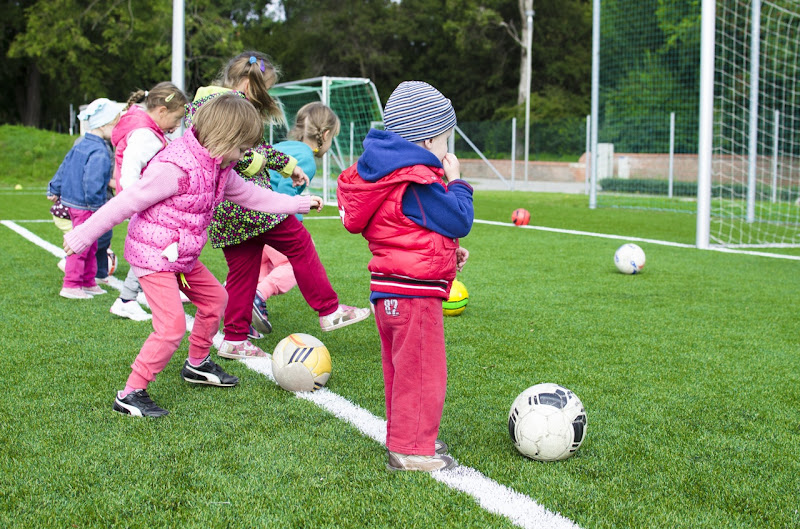
Winning is nice, but youth sports are much more than that, and the stakes are bigger than in a soccer or football game.
Children can gain new abilities, boost their self-esteem, develop their character, and much more via healthy competition, teamwork, and exercise. Therefore, the goal of using athletics to promote a child's entire development takes precedence over any desire to win. Win or lose, these early experiences are what help mold the next generation.
This article provides a high-level summary of the advantages of sports for kids' development and how they can improve social skills, academic achievement, mental and emotional well-being, and physical health.
Examining the Advantages of Youth Sports for Physical Health
Physical health is perhaps the first thing that springs to mind when considering the advantages of competitive sports for children's development. As video games, social networking, and other digital technology have become more popular over the past several decades, there has been a significant shift towards indoor recreation.
According to a recent British study, kids now play video games indoors twice as frequently as they do outside. Given this, it is not surprising that the CDC recently revealed that the childhood obesity rate in the US is 19.7%. There has never been a more crucial time to promote physical activity among kids and teenagers.
It's not all bad news, either. It is evident from statistics on the advantages of childhood sports that participants profit greatly from their involvement. Along with reducing obesity, the Australian state of Victoria's government and the National Athletic Trainer's Association found several other aspects of physical health that demonstrate how sports benefit young people's development:
Reduced chance of developing diabetes, cancer, heart disease, and stroke in the future
Reduced rates of drug abuse reported
Increased strength, endurance, functional movement abilities, and hand-eye coordination
improved growth of the tendons, ligaments, muscles, and bones
Better sleep Better physical relaxation, which helps prevent the consequences of persistent muscle discomfort
Playing sports helps kids form healthy habits that last a lifetime: One long-term study found that youngsters who played childhood sports from the age of nine to eighteen had a five to six times higher chance of becoming physically active as adults.
Uncovering Youth Sports' Psychological Benefits
Although the advantages of K–12 athletics for physical health have long been recognized and widely reported, the psychological advantages of youth sports have received more attention recently. What little exposure there is to the outdoors must do more of the heavy lifting as people spend less and less time outside. Coaches, teachers, and other adults who oversee K–12 athletics must therefore understand the profound influence they have on their players and pupils.
There is substantial evidence that playing sports throughout a child's formative years can have a significant positive impact, even in the midst of what some have referred to as a "kids' mental health crisis." Youth sports have several psychological advantages, such as:
Reduced levels of stress
Reduced prevalence of sadness and anxiety
Increased self-assurance and self-worth
Enhanced cognitive function
More originality
Furthermore, research has linked juvenile sports engagement to improved happiness and self-esteem, as well as, for girls specifically, to a more positive body image.
The Unspoken Connection Between Academic Achievement and Youth Sports
It's not always clear how academics and athletics are related. In fact, some parents believe that their child's already hectic schedule will suffer if they spend time on sports instead of studying. There is data, however, that suggests the converse is true, namely that involvement in athletics during school contributes to academic performance and after. The following are some ways that this could appear:
Reduced rates of school dropouts
Higher GPAs and improved overall academic performance
Test scores that are up to 40% higher than those of their peers
A statistically significant chance of going to college
The higher achievement levels that result from a child's participation in athletics go well beyond the classroom and into later life. According to research, former student players make up to 7% to 8% more money annually and are more productive at work than those who did not play youth sports.
Creating Connections Through Youth Sports
By reducing conflict and promoting relationships among its constituents, social skills contribute to the formation of society's foundation. The majority of people would concur. Nonetheless, some people would always inquire: How do sports improve social skills? Indeed, fields and courts serve as venues for young people to acquire these talents and take their first tentative steps toward identity formation in a variety of ways.
Being youthful means that you are always changing. While a lot of focus needs to be placed on introspection, team sports necessitate collaboration with others in order to accomplish a shared objective. This makes the focus more outward, allowing participants to develop the kind of teamwork and bonding abilities that they will need throughout their lives. These kinds of encounters foster and develop high-level communication, teamwork, and evaluation abilities.
Youngsters who play youth sports are more likely to engage in civic activities and to form closer bonds with their peers. Increased parental participation in youth sports gives kids more chances to engage with their parents, which can strengthen the bond between parents and kids.
Students who participate in K–12 sports can benefit greatly, and frequently for the rest of their lives. For many kids, the assistance and guidance of a trained coach is one of the most important factors that separates a good youth sports experience from a bad one. In addition to teaching children the fundamentals and encouraging a love of sports, coaches act as role models by exhibiting leadership, fostering inclusive environments, and imparting important life skills.
The Coaching Today's Student-Athlete Certificate, which is proudly offered by the Division of Professional and Continuing Education (PCE) at the University of San Diego, gives you the knowledge you need to help those under your supervision reach their full potential. The knowledge you get from this program will enable you to inspire the next generation and raise not just outstanding athletes but also outstanding people.
Children can gain new abilities, boost their self-esteem, develop their character, and much more via healthy competition, teamwork, and exercise. Therefore, the goal of using athletics to promote a child's entire development takes precedence over any desire to win. Win or lose, these early experiences are what help mold the next generation.
This article provides a high-level summary of the advantages of sports for kids' development and how they can improve social skills, academic achievement, mental and emotional well-being, and physical health.
Examining the Advantages of Youth Sports for Physical Health
Physical health is perhaps the first thing that springs to mind when considering the advantages of competitive sports for children's development. As video games, social networking, and other digital technology have become more popular over the past several decades, there has been a significant shift towards indoor recreation.
According to a recent British study, kids now play video games indoors twice as frequently as they do outside. Given this, it is not surprising that the CDC recently revealed that the childhood obesity rate in the US is 19.7%. There has never been a more crucial time to promote physical activity among kids and teenagers.
It's not all bad news, either. It is evident from statistics on the advantages of childhood sports that participants profit greatly from their involvement. Along with reducing obesity, the Australian state of Victoria's government and the National Athletic Trainer's Association found several other aspects of physical health that demonstrate how sports benefit young people's development:
Reduced chance of developing diabetes, cancer, heart disease, and stroke in the future
Reduced rates of drug abuse reported
Increased strength, endurance, functional movement abilities, and hand-eye coordination
improved growth of the tendons, ligaments, muscles, and bones
Better sleep Better physical relaxation, which helps prevent the consequences of persistent muscle discomfort
Playing sports helps kids form healthy habits that last a lifetime: One long-term study found that youngsters who played childhood sports from the age of nine to eighteen had a five to six times higher chance of becoming physically active as adults.
Uncovering Youth Sports' Psychological Benefits
Although the advantages of K–12 athletics for physical health have long been recognized and widely reported, the psychological advantages of youth sports have received more attention recently. What little exposure there is to the outdoors must do more of the heavy lifting as people spend less and less time outside. Coaches, teachers, and other adults who oversee K–12 athletics must therefore understand the profound influence they have on their players and pupils.
There is substantial evidence that playing sports throughout a child's formative years can have a significant positive impact, even in the midst of what some have referred to as a "kids' mental health crisis." Youth sports have several psychological advantages, such as:
Reduced levels of stress
Reduced prevalence of sadness and anxiety
Increased self-assurance and self-worth
Enhanced cognitive function
More originality
Furthermore, research has linked juvenile sports engagement to improved happiness and self-esteem, as well as, for girls specifically, to a more positive body image.
The Unspoken Connection Between Academic Achievement and Youth Sports
It's not always clear how academics and athletics are related. In fact, some parents believe that their child's already hectic schedule will suffer if they spend time on sports instead of studying. There is data, however, that suggests the converse is true, namely that involvement in athletics during school contributes to academic performance and after. The following are some ways that this could appear:
Reduced rates of school dropouts
Higher GPAs and improved overall academic performance
Test scores that are up to 40% higher than those of their peers
A statistically significant chance of going to college
The higher achievement levels that result from a child's participation in athletics go well beyond the classroom and into later life. According to research, former student players make up to 7% to 8% more money annually and are more productive at work than those who did not play youth sports.
Creating Connections Through Youth Sports
By reducing conflict and promoting relationships among its constituents, social skills contribute to the formation of society's foundation. The majority of people would concur. Nonetheless, some people would always inquire: How do sports improve social skills? Indeed, fields and courts serve as venues for young people to acquire these talents and take their first tentative steps toward identity formation in a variety of ways.
Being youthful means that you are always changing. While a lot of focus needs to be placed on introspection, team sports necessitate collaboration with others in order to accomplish a shared objective. This makes the focus more outward, allowing participants to develop the kind of teamwork and bonding abilities that they will need throughout their lives. These kinds of encounters foster and develop high-level communication, teamwork, and evaluation abilities.
Youngsters who play youth sports are more likely to engage in civic activities and to form closer bonds with their peers. Increased parental participation in youth sports gives kids more chances to engage with their parents, which can strengthen the bond between parents and kids.
Students who participate in K–12 sports can benefit greatly, and frequently for the rest of their lives. For many kids, the assistance and guidance of a trained coach is one of the most important factors that separates a good youth sports experience from a bad one. In addition to teaching children the fundamentals and encouraging a love of sports, coaches act as role models by exhibiting leadership, fostering inclusive environments, and imparting important life skills.
The Coaching Today's Student-Athlete Certificate, which is proudly offered by the Division of Professional and Continuing Education (PCE) at the University of San Diego, gives you the knowledge you need to help those under your supervision reach their full potential. The knowledge you get from this program will enable you to inspire the next generation and raise not just outstanding athletes but also outstanding people.

Post a Comment