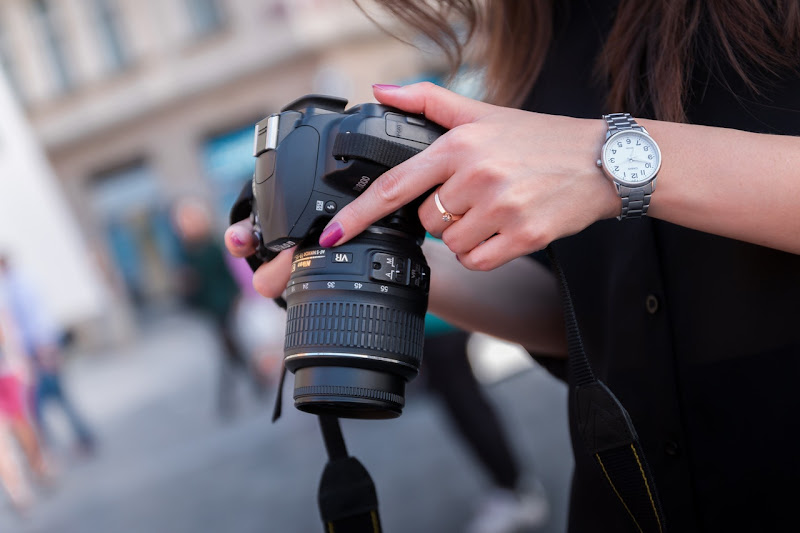
One of the industries that is flourishing at the moment is photography. Both the potential for growth and the opportunities in the sector are limitless.
Full-time photographers can earn between $30,000 and $75,000 USD year, and some make even more, according to an Adorama article.
For those who are passionate about photography, this is an interesting career option, but many people are hesitant to pursue photography full-time.
We've listed a few pointers to assist these individuals in landing their ideal position and launching a full-time photography business:
Purchasing a course in photography
Identify your target market and define your niche.
Invest in the appropriate kinds of equipment.
Look for a mentor in photography.
Develop your portfolio.
Getting your photography business registered
Make a plan for your business.
Using intelligent AI tools to increase productivity
Promoting your company
Make connections with other photographers.
Purchasing a course in photography:
You may have some concerns about specific aspects of starting a full-time photography business, such writing a business plan, establishing objectives, presenting yourself, etc., or a broader skill set, like lighting, posing, etc.
Fortunately, many photography instructors share their insights and expertise on these subjects.
Investing in their courses can help you expand your business in a particular photography niche if you're just starting out. If you're unsure about a particular skill set, like editing or posing, you can also look into free online workshops and videos that can help you gain confidence in those areas.
Identify your target market and define your niche: The photography industry is competitive, particularly online. Identifying your specialty where you can make a difference and defining your target audience are crucial.
Knowing exactly who your target market is can also make it easier to adjust your business and marketing tactics to appeal to them. Additionally, you will be able to better grasp the needs of your target audience and specialize in that field.
Invest in the appropriate kinds of equipment:
A certain kind of photographic equipment is needed for every type of photography task. Wildlife photography might not be a suitable fit for the lens used for portraiture.
The equipment's quality is no different. When they engage with professional photographers, clients have specific expectations about the quality of the work. Therefore, professional photographers should avoid purchasing entry-level cameras.
One should use caution while making investments in the following products, taking into account both equipment type and quality:
Cameras: Probably the most crucial piece of gear to select. Determine the type of lens that is compatible with the camera, such as full frame or APSC, DSLR or mirrorless, etc.
Lens: Which type of focal length is appropriate for you and should you get a prime or zoom lenses?
Lighting apparatus: Lighting strobes, reflectors, or softboxes may be necessary purchases for professional photographers.
Tripod: Invest in a decent tripod for crisp, blur-free photos.
Cards for memory: A high-quality memory card facilitates the quick capture and storage of numerous photos at once.
Backup drives: It's crucial to have a physical hard drive backup of all your modified and RAW files for a specific period of time.
All things considered, it is essential to conduct thorough study and make a thoughtful investment in dependable, superior equipment that is appropriate for the style of photography you are doing.
Locate a mentor in photography: For anyone launching a photography business, locating a mentor with experience in your field can be a tremendous help.
A good mentor not only gives you advice on how to accomplish your goals, but they also hold you accountable and inspire you to do so.
They offer you individualized support that is focused on reaching your objectives.
Additionally, a mentor can assist you in avoiding the pitfalls that they and many other photographers make when they first start their businesses.
In general, having a mentor when you first start your photography business is a terrific idea.
Create your portfolio: When beginning a photography business, it's crucial to create a portfolio that demonstrates your vision and style.
Customers prefer to see the tools they are using. In addition to impressing your clients, a solid portfolio will set certain expectations for the kind of work they may expect from you.
Using a specific subject and style, compile your greatest work into an online portfolio. Continue adding new subjects to it to demonstrate your versatility as a photographer.
Getting your photography business registered
It's crucial to register your photography business as a distinct legal organization, either as a partnership or sole proprietorship (if you're working with someone else).
Verify that you possess the permits needed to run your company in your community.
In order to prevent any disputes over the work, this also makes things official and transparent when you are working with a client and have a contract with them.
Additionally, you can purchase business insurance to protect your photography equipment from theft, damage, and other threats.
It's also a good idea to have a separate bank account for your business since it makes it easier to keep track of all your spending.
Make a business plan:
When launching a photography business, having a clear business plan is essential.
A clear business plan aids in setting short- and long-term objectives for your company, establishing price structures, and deciding on marketing and investment strategies.
A business degree is not necessary to solve this problem. You can learn how to create a photography business plan in depth from a variety of online courses.
Using intelligent AI tools to increase productivity:
Photographers may now take advantage of AI tools that can help them save time and effort in their workflow thanks to technological and artificial intelligence advancements.
Various kinds of tools are available to assist with different aspects of their workflow.
Photographers can automatically send contracts and invoices and get online bookings by using a CRM tool.
AI picture culling software can automatically mark blurry and blinking photos as rejected, and AI editing software can alter photos automatically in a matter of minutes.
Platforms for online galleries to share the images with clients (along with music!) in order to provide a smooth experience.
See our collection of AI tools for photographic workflows here.
Marketing your company: Marketing is crucial for all types of businesses, but it's particularly crucial for photography firms.
Even though there are thousands of various ways to market your business, word-of-mouth advertising is a good place to start.
One effective and affordable marketing strategy for your photography business is word-of-mouth. To get the word out, enlist the aid of your loved ones. Provide specials and seasonal discounts.
Digital marketing is another option for your company.
Social media may serve as both a portfolio and a platform for sharing, offering, and providing updates about your photography business.
Another strategy to increase website traffic and generate leads for your photography business is to use Facebook and Google ads.
Make connections with other photographers: Making connections with photographers who share your interests can help you learn more and see business-related topics from a fresh angle.
You can sign up for a Facebook photography group that is more specific to your area of interest or join a local photography club. On your path to launching a photography business, you can make new acquaintances and find seasoned mentors.
Additionally, this creates new chances for partnerships and cooperative ventures. When photographers are unavailable to take on a project, they can recommend you to their clients through word-of-mouth marketing, which is another benefit of networking.
In conclusion
In conclusion, if you love taking pictures and have the drive to work hard and tenaciously to achieve your financial objectives, starting a photography business is definitely worthwhile.
You need to be prepared to begin your career as a professional photographer after reading this blog's advice. Visit our site for the top photography educators if you're searching for someone who can help you launch your photography career.
Full-time photographers can earn between $30,000 and $75,000 USD year, and some make even more, according to an Adorama article.
For those who are passionate about photography, this is an interesting career option, but many people are hesitant to pursue photography full-time.
We've listed a few pointers to assist these individuals in landing their ideal position and launching a full-time photography business:
Purchasing a course in photography
Identify your target market and define your niche.
Invest in the appropriate kinds of equipment.
Look for a mentor in photography.
Develop your portfolio.
Getting your photography business registered
Make a plan for your business.
Using intelligent AI tools to increase productivity
Promoting your company
Make connections with other photographers.
Purchasing a course in photography:
You may have some concerns about specific aspects of starting a full-time photography business, such writing a business plan, establishing objectives, presenting yourself, etc., or a broader skill set, like lighting, posing, etc.
Fortunately, many photography instructors share their insights and expertise on these subjects.
Investing in their courses can help you expand your business in a particular photography niche if you're just starting out. If you're unsure about a particular skill set, like editing or posing, you can also look into free online workshops and videos that can help you gain confidence in those areas.
Identify your target market and define your niche: The photography industry is competitive, particularly online. Identifying your specialty where you can make a difference and defining your target audience are crucial.
Knowing exactly who your target market is can also make it easier to adjust your business and marketing tactics to appeal to them. Additionally, you will be able to better grasp the needs of your target audience and specialize in that field.
Invest in the appropriate kinds of equipment:
A certain kind of photographic equipment is needed for every type of photography task. Wildlife photography might not be a suitable fit for the lens used for portraiture.
The equipment's quality is no different. When they engage with professional photographers, clients have specific expectations about the quality of the work. Therefore, professional photographers should avoid purchasing entry-level cameras.
One should use caution while making investments in the following products, taking into account both equipment type and quality:
Cameras: Probably the most crucial piece of gear to select. Determine the type of lens that is compatible with the camera, such as full frame or APSC, DSLR or mirrorless, etc.
Lens: Which type of focal length is appropriate for you and should you get a prime or zoom lenses?
Lighting apparatus: Lighting strobes, reflectors, or softboxes may be necessary purchases for professional photographers.
Tripod: Invest in a decent tripod for crisp, blur-free photos.
Cards for memory: A high-quality memory card facilitates the quick capture and storage of numerous photos at once.
Backup drives: It's crucial to have a physical hard drive backup of all your modified and RAW files for a specific period of time.
All things considered, it is essential to conduct thorough study and make a thoughtful investment in dependable, superior equipment that is appropriate for the style of photography you are doing.
Locate a mentor in photography: For anyone launching a photography business, locating a mentor with experience in your field can be a tremendous help.
A good mentor not only gives you advice on how to accomplish your goals, but they also hold you accountable and inspire you to do so.
They offer you individualized support that is focused on reaching your objectives.
Additionally, a mentor can assist you in avoiding the pitfalls that they and many other photographers make when they first start their businesses.
In general, having a mentor when you first start your photography business is a terrific idea.
Create your portfolio: When beginning a photography business, it's crucial to create a portfolio that demonstrates your vision and style.
Customers prefer to see the tools they are using. In addition to impressing your clients, a solid portfolio will set certain expectations for the kind of work they may expect from you.
Using a specific subject and style, compile your greatest work into an online portfolio. Continue adding new subjects to it to demonstrate your versatility as a photographer.
Getting your photography business registered
It's crucial to register your photography business as a distinct legal organization, either as a partnership or sole proprietorship (if you're working with someone else).
Verify that you possess the permits needed to run your company in your community.
In order to prevent any disputes over the work, this also makes things official and transparent when you are working with a client and have a contract with them.
Additionally, you can purchase business insurance to protect your photography equipment from theft, damage, and other threats.
It's also a good idea to have a separate bank account for your business since it makes it easier to keep track of all your spending.
Make a business plan:
When launching a photography business, having a clear business plan is essential.
A clear business plan aids in setting short- and long-term objectives for your company, establishing price structures, and deciding on marketing and investment strategies.
A business degree is not necessary to solve this problem. You can learn how to create a photography business plan in depth from a variety of online courses.
Using intelligent AI tools to increase productivity:
Photographers may now take advantage of AI tools that can help them save time and effort in their workflow thanks to technological and artificial intelligence advancements.
Various kinds of tools are available to assist with different aspects of their workflow.
Photographers can automatically send contracts and invoices and get online bookings by using a CRM tool.
AI picture culling software can automatically mark blurry and blinking photos as rejected, and AI editing software can alter photos automatically in a matter of minutes.
Platforms for online galleries to share the images with clients (along with music!) in order to provide a smooth experience.
See our collection of AI tools for photographic workflows here.
Marketing your company: Marketing is crucial for all types of businesses, but it's particularly crucial for photography firms.
Even though there are thousands of various ways to market your business, word-of-mouth advertising is a good place to start.
One effective and affordable marketing strategy for your photography business is word-of-mouth. To get the word out, enlist the aid of your loved ones. Provide specials and seasonal discounts.
Digital marketing is another option for your company.
Social media may serve as both a portfolio and a platform for sharing, offering, and providing updates about your photography business.
Another strategy to increase website traffic and generate leads for your photography business is to use Facebook and Google ads.
Make connections with other photographers: Making connections with photographers who share your interests can help you learn more and see business-related topics from a fresh angle.
You can sign up for a Facebook photography group that is more specific to your area of interest or join a local photography club. On your path to launching a photography business, you can make new acquaintances and find seasoned mentors.
Additionally, this creates new chances for partnerships and cooperative ventures. When photographers are unavailable to take on a project, they can recommend you to their clients through word-of-mouth marketing, which is another benefit of networking.
In conclusion
In conclusion, if you love taking pictures and have the drive to work hard and tenaciously to achieve your financial objectives, starting a photography business is definitely worthwhile.
You need to be prepared to begin your career as a professional photographer after reading this blog's advice. Visit our site for the top photography educators if you're searching for someone who can help you launch your photography career.

Post a Comment